Every generation inherits its own assumptions about education. My grandparents’ generation regarded education as a privilege that few could access. My parents’ generation saw it as the surest path to opportunity and stability. By the time I was growing up, a university degree had become the accepted gateway to a successful career. Study hard, graduate, find meaningful work and spend the following decades building upon what you had learned. For much of the twentieth century, that model made perfect sense because knowledge changed relatively slowly. Experience accumulated, expertise deepened and education provided a foundation that could sustain an entire working life.
The relationship between knowledge and work has changed profoundly. Artificial intelligence is reshaping professional services. Medical discoveries continue to redefine healthcare. Entire industries are emerging while others are being transformed beyond recognition. Skills that once remained relevant for decades now require constant renewal, while new disciplines appear faster than educational institutions can adapt their curricula. Knowledge has not become less valuable, but it has become less permanent. A qualification earned at twenty-two is still important, although it can no longer be expected to carry someone unchanged through the next forty years of their career.
For most of modern history, learning was concentrated at the beginning of life. We spent our early years acquiring knowledge and the rest of our lives applying it. Today, learning and working have become inseparable. The most successful professionals are no longer distinguished simply by what they know, but by how readily they acquire new knowledge, challenge old assumptions and adapt to unfamiliar circumstances. The first degree remains important, yet it is no longer the most significant education many of us will receive. The education that matters most is the education we continue giving ourselves long after graduation.
Returning to learning does not necessarily mean returning to university. It means remaining intellectually curious in a world that constantly rewards certainty. It means reading beyond our profession, listening to people whose experiences differ from our own, developing unfamiliar skills and recognising when long-held assumptions deserve to be questioned. Whenever I meet entrepreneurs, doctors, scientists or educators whom I admire, I notice the same quality. Success has not convinced them they have finished learning. On the contrary, achievement has often made them more curious because experience has shown them how much there is still to understand.
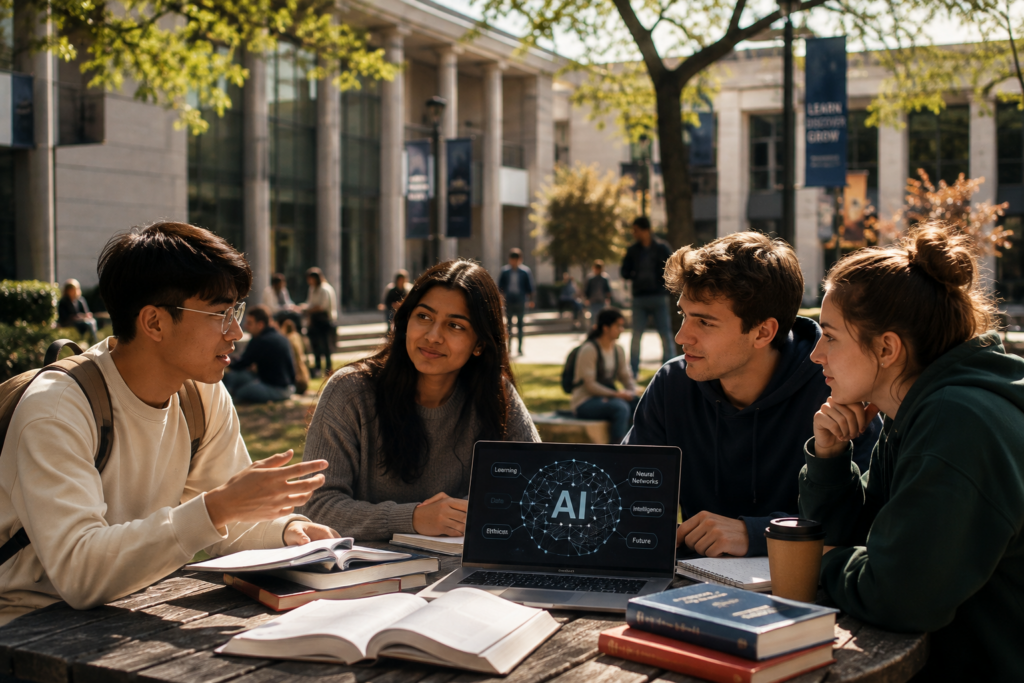
Artificial intelligence has made this distinction even clearer. Finding information has become easier than at any point in history. Judgement has become more valuable. Facts are increasingly available to everyone, while the ability to interpret evidence, connect ideas, exercise wisdom and understand people remains distinctly human. Those qualities cannot be memorised during a few years at university. They develop gradually through reflection, experience and an enduring willingness to learn from others. Education therefore becomes less about accumulating information than about developing the habits of mind that allow us to keep learning throughout our lives.
This belief has shaped the William S.D. Louey Educational Foundation from the very beginning. Scholarships provide opportunities that might otherwise remain out of reach, but they are only the starting point. The greater ambition is to support individuals who continue growing long after they leave university, who approach new ideas with curiosity rather than fear and who recognise that education is not a stage of life but a lifelong responsibility. Looking back at many of our scholars, I see careers that have crossed industries, countries and disciplines in ways that could never have been predicted when they first received their scholarships. Their achievements reflect more than academic success. They demonstrate the value of remaining adaptable in a society that never stands still.
That is ultimately how I measure the return on education. A scholarship should never be judged solely by the university someone attends, the degree they earn or even the first career they pursue. Its greatest value emerges over decades, as knowledge continues to evolve and individuals continue evolving alongside it. The real return lies in developing people who never stop asking questions, never lose the discipline to learn and never assume that yesterday’s knowledge will always be enough for tomorrow’s challenges. Graduation does not mark the end of education. It marks the moment when responsibility for learning passes from the institution to the individual, and few responsibilities will become more important in the years ahead.